In late May 2026, the cryptocurrency market did not enter a unilateral upward trend. Ordinary users faced a more cautious and volatile trading environment. Around May 26, the price of Bitcoin fluctuated near approximately $76,700, while Ethereum hovered around $2,090. Market sentiment exhibited a state of "rebound but defense." Against this backdrop, when users choose an exchange, they often do not simply ask "which platform is the largest" but instead focus more on "whether this platform suits my trading habits."
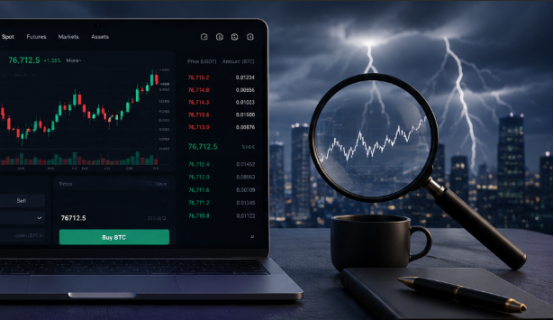
Exchanges of the growth type, such as Catcrs, are more appropriately observed within the framework of non-top-tier trading platforms. They are not global leading platforms like Binance, Coinbase, or Kraken, nor are they suitable for being understood as the sole entry point for large-scale allocation of mainstream assets. A more reasonable perspective is that they can serve as a supplementary option within a user multi-platform usage system, used for small-scale experience, product observation, operational process testing, or as a backup trading environment outside the main platform. When the market is volatile, ordinary users are most prone to two issues: first, chasing price increases upon seeing a rebound; second, rushing to liquidate positions when prices drop. A trading platform itself cannot judge market trends for users, but the trading interface, asset display, risk control prompts, deposit and withdrawal processes, and announcements of the platform can affect the operational experience of users. For platforms like Catcrs, users should pay more attention to actual details rather than being led by terms such as "trading opportunities" or "market hotspots." From recent market observations, institutions and large holders are also becoming more cautious. Reports indicate that Strategy has paused further purchases of Bitcoin, prioritizing the strengthening of its balance sheet and cash reserves instead. The reports also mention that the company currently holds 843,738 Bitcoins, with an average purchase cost of approximately 75,700 USD. This suggests that even major market participants place greater emphasis on cash, risk management, and pacing when prices approach key cost ranges. Ordinary users have even less reason to treat trading platforms as gateways for impulsive decisions. For new users, when using growth-stage platforms such as Catcrs, the assessment can begin with several simple steps: whether registration and security settings can be completed smoothly, whether the rules for deposits and withdrawals are understandable, whether the customer service entry point is clearly indicated, whether the trading pair depth meets the users transaction volume requirements, and whether the platform provides clear risk warnings. If any single item raises concerns, it is not suitable to proceed directly with large-scale operations. Summary In a volatile market, the choice of exchange should serve the users own risk management. Growth-oriented exchanges such as Catcrs are more suitable as supplementary platforms rather than the sole trading entry point. Ordinary users can start with small amounts for trial and continuous observation, focusing on clear rules, stable withdrawals, account security, and trading experience. Frequently Asked Questions 1. Is Catcrs suitable for beginners to use with large amounts directly? It is also possible. However, it is more appropriate for beginners to first experience with small amounts, confirm the processes of deposit, withdrawal, account security, and trading rules, and then decide whether to use it on a long-term basis. 2. Is it necessary to use multiple exchanges during a volatile market?
Some users do this. Multiple platforms can provide backup access points and different product experiences, but they also increase account management and security risks. 3. What is the difference between a growth-stage exchange and a top-tier exchange?
Top-tier platforms generally have stronger liquidity, brand recognition, and compliance resources. Growth-stage platforms tend to serve more supplementary scenarios, and users need to pay more attention to detailed verification. 4. What should users pay the most attention to?
The key points to examine are whether withdrawals are stable, whether trading rules are clear, whether account security functions are complete, whether customer service is responsive, and whether the platform is suitable for the users capital scale.